
DFB激光器的相對强度噪音測試
6241 Series Optical Relative Intensity Noise Analyzer
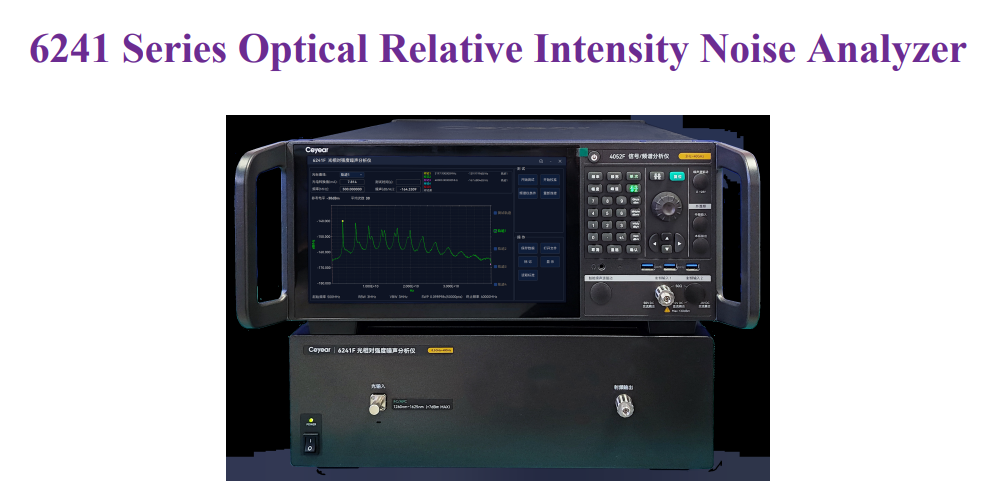
分佈反饋(DFB)雷射器因其優異的光譜與調變特性,被廣泛應用於光通訊、感測、測繪等領域。在光通訊領域中,DFB光晶片是光收發模組的核心光學元件,作為中長距離通訊的基礎光源,更是5G基地台前傳、資料中心中距互聯的主流方案。
相對強度雜訊(RIN)是衡量DFB雷射器及光收發模組性能的重要指標,也是800G/1.6T高速光模組的必測項目,直接影響數據高速傳輸時的誤碼率。「思儀科技」的光相對強度雜訊分析儀,可實現對DFB光晶片與800G/1.6T光模組RIN的精準量測與分析,助力DFB晶片及下游產業化的開發與應用。
The Optical Relative Intensity Noise Analyzer can achieve optical relative intensity noise (RIN) characterization
analysis up to 100 MHz to 67 GHz, featuring wide wavelength band, wide frequency test range, and high sensitivity. It is
a precision measurement instrument for RIN characterization in testing fields such as optical chips, optical modules,
optical communications, optical sensing, single-frequency lasers, and tunable laser sources.
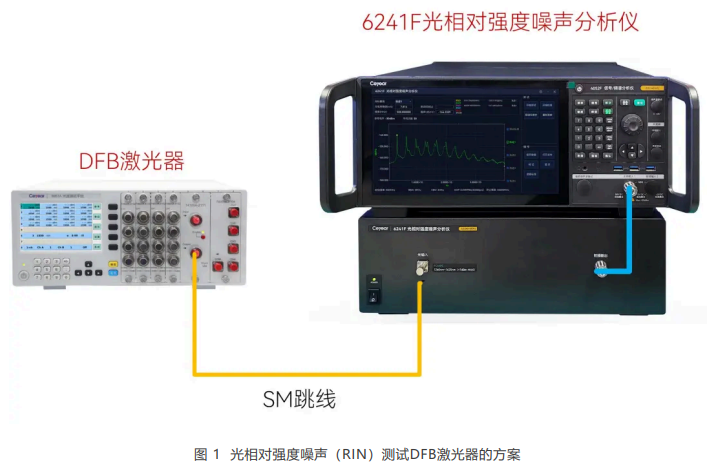
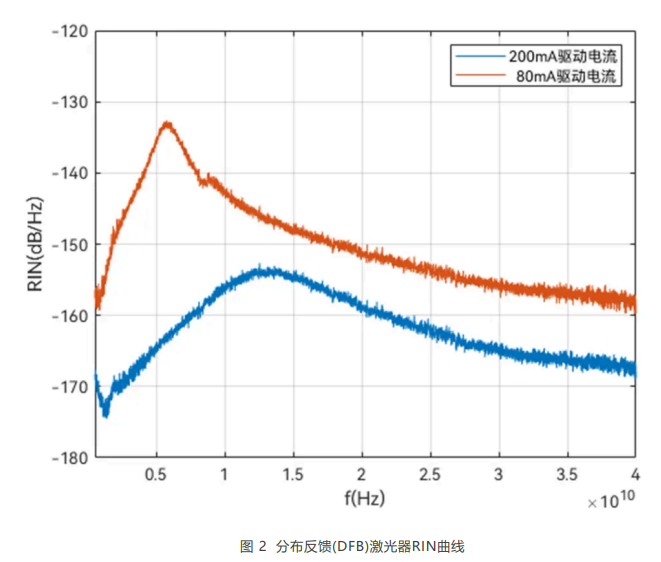
圖 2 展示了自研 DFB 雷射器的 RIN 特性曲線,RIN 量測曲線顯示隨著驅動電流的增大,電子與光子的轉換效率增強,DFB 雷射器 RIN 測試曲線整體降低,曲線趨於平緩。弛豫振盪峰的中心頻率增大、幅度降低,表現為向右下偏移。RIN 量測曲線可以直觀地反映 DFB 雷射器的弛豫振盪峰,而控制並優化 DFB 晶片的弛豫振盪峰,正是研發高速光模組與 DFB 雷射器的關鍵步驟。
「思儀科技」推出的光相對強度雜訊測試方案,可精準量測 DFB 晶片、光源、光模組的 RIN 特性,解決 DFB 雷射器從研發、生產到應用的全生命週期量測需求,並滿足不同使用者的差異化需求。「思儀科技」始終密切關注客戶的最新需求,致力於提供高品質的產品與卓越的服務,期待與您的攜手合作。
光相對強度雜訊(RIN)分析儀由電科思儀獨立自主設計,具備 0.1~40GHz 光相對強度雜訊特性的量測、數據分析與比對、雜訊底(Noise Floor)優化等功能。憑藉其系統級的校準方案,可實現 -170dB/Hz 的 RIN 最小量測值,並支援 1260~1625nm 波長範圍內光訊號相對強度雜訊的量測分析。圖 1 為 DFB 雷射器 RIN 量測應用案例。
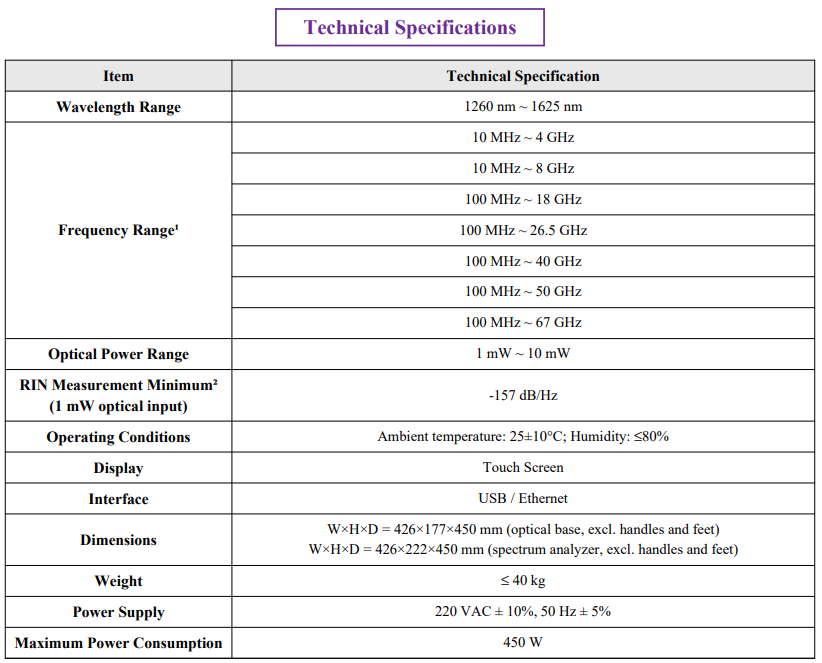
Complete Measurement and Display of Optical Relative Intensity Noise
Enables measurement, display, and analysis of optical relative intensity noise spectral density characteristics under large
bandwidth, while outputting the DC value of optoelectronic conversion. By setting marker functions, the software can
automatically search for global or local peaks of the RIN measurement curve, facilitating users to quickly read and analyze
the maximum RIN measurement value.
Wide Wavelength Range Covering O-band + CL-band
Enables measurement and analysis of optical relative intensity noise of optical signals at any wavelength point within the
wide wavelength range of 1260 nm to 1625 nm.
Bandwidth Range up to 67 GHz
Enables measurement and analysis of optical relative intensity noise of optical signals within the wide frequency range of
100 MHz to 67 GHz. The measurement bandwidth of up to 67 GHz allows users to better analyze and study the RIN
characteristics of each frequency band of the light source under test.
High Sensitivity
The minimum RIN measurement value can be as low as -157 dB/Hz (@1 mW optical input), with a theoretical value of
-170 dB/Hz (@10 mW optical input). The high sensitivity meets customers’ more precise testing needs.
Remote Control
The device has an Ethernet program control interface and provides a remote control command set.
